
Honeywell Air Duct Cleaning in Columbus: A Homeowner’s Guide
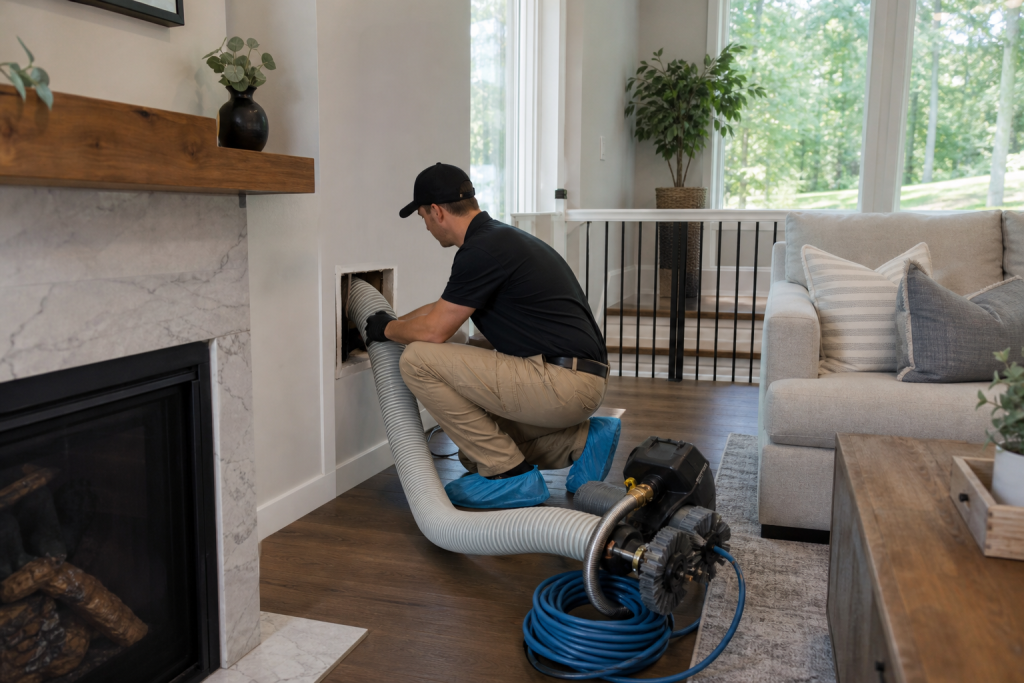
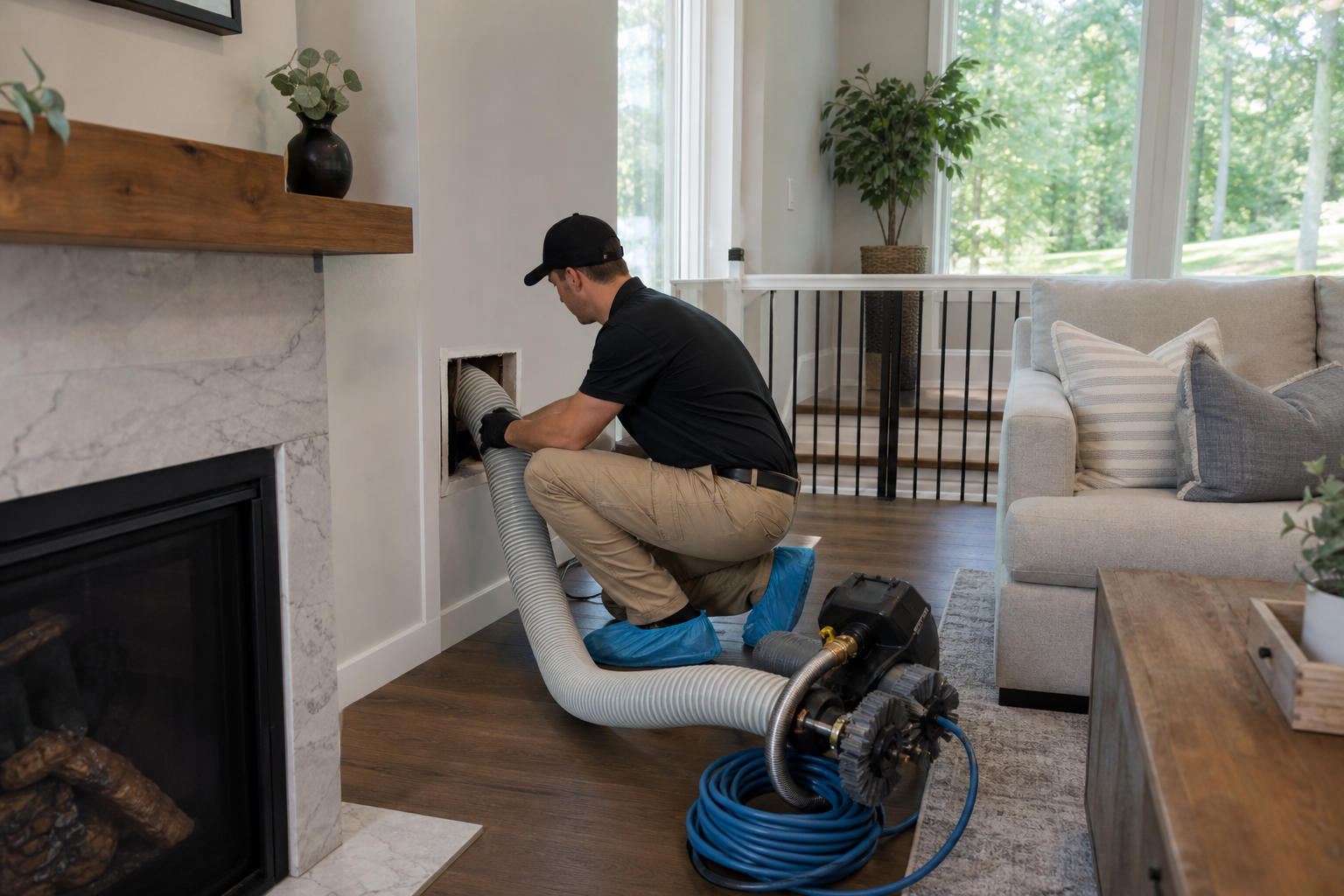
Honeywell air duct cleaning in Columbus requires different protocols than standard duct cleaning because Honeywell components—whole-home humidifiers, electronic air cleaners, and UV systems—change how contaminants collect and how equipment interacts with your HVAC system. A typical Rotobrush pass that ignores a Honeywell bypass humidifier’s water panel can leave active microbial colonies that recontaminate clean ducts within weeks. In Columbus, where hard water from the Scioto River watershed accelerates mineral buildup in humidifier reservoirs, this distinction matters more than most homeowners realize.
If you’d rather not sort out which Honeywell components are in your system yourself, call us at (866) 531-6429—we’ll identify everything during a free pre-inspection and walk you through what actually needs attention.
Which Honeywell Components Live Inside Columbus Duct Systems
Most Columbus homes we service fall into one of three categories: they’ve got a Honeywell whole-home humidifier mounted on the supply plenum, an electronic air cleaner (EAC) in the return duct, or both. A growing number—especially in newer builds around Dublin and Powell—also have Honeywell UV treatment systems installed downstream of the coil. Each component changes the contamination profile of your ductwork, and each requires a different cleaning approach.
Here’s what we typically find in Columbus HVAC systems:
- Bypass humidifiers (HE100, HE200, HE300 series): These pull warm air through a water-soaked panel and return humidified air to the supply. The water panel, distribution tray, and drain line are constant moisture environments—prime territory for mold and bacteria that standard duct cleaning never touches.
- Electronic air cleaners (F300, F50A): These use ionizing cells to charge particles before they hit a collector cell. The cells themselves need separate cleaning (usually dishwasher-safe, but timing matters), and the pre-filter housing accumulates debris differently than standard fiberglass filters.
- UV air purifiers (UV2400, UV100): Installed near the evaporator coil, these reduce microbial growth on the coil and in the immediate plenum area. But UV bulbs degrade over time, and the lamp housing can become a debris trap if not inspected during duct cleaning.
- Media air cleaners (F100, F200): High-MERV filter cabinets that create a pressure drop and can force leaks in older ductwork if not sealed properly during cleaning.
In our eight years working across Columbus—from Victorian Village to Grove City—we’ve learned that Honeywell components are often installed by HVAC contractors who never told the homeowner what they bought. We regularly walk into jobs where the owner didn’t know they had a humidifier until we opened the plenum.
Why Honeywell Bypass Humidifiers Need Separate Cleaning
This is where most duct cleaning goes wrong in Columbus. A standard negative-pressure cleaning—hooking a vacuum to your trunk line and agitating the ducts—does nothing for a Honeywell bypass humidifier’s internal components. The water panel sits in its own housing, isolated from main airflow during normal operation. The distribution tray, solenoid valve, and drain line are even further removed.
Yet these components are often the dirtiest part of the system. Columbus water is moderately hard—typically 120–150 ppm calcium carbonate in city-supplied areas—which means mineral scale builds fast on humidifier panels. That scale traps organic material. Combined with the 70–80% summer humidity we see in Central Ohio, you’ve got a recipe for microbial growth that aerosolizes into your supply air every time the humidifier cycles.
Our process for homes with Honeywell humidifiers includes:
- Isolate the humidifier from the duct system before connecting negative-pressure equipment—prevents water from being drawn into the vacuum
- Remove and inspect the water panel; document scale buildup and any biological growth
- Clean the distribution tray and drain line with controlled pressure (not shop-vac suction, which can damage small-diameter drain tubing)
- Inspect the solenoid valve for calcium obstruction—common after multiple seasons without service
- Reassemble and test before the main duct cleaning begins
We pulled one out of a garage over in Clintonville last month where the previous cleaner had run their brush straight past a HE300 humidifier, never opened the housing, and left a water panel that was essentially a petri dish. The homeowner called us two weeks later wondering why their “clean” ducts smelled musty. That’s the $200 cleaning that creates a $600 follow-up.
Electronic Air Cleaners: When to Remove Cells Before Duct Cleaning
Honeywell EACs present a different problem. The ionizing wires and collector cells are precision components—easily damaged by the mechanical agitation used in duct cleaning. But they’re also magnets for debris, and cleaning around them without addressing the cells themselves leaves a significant contamination source in place.
The question is sequence. Remove the cells before connecting negative-pressure equipment, and you risk drawing loose debris past the open filter slot into the blower compartment. Leave them in during aggressive brushing, and you can bend wires or crack ceramic insulators.
In Columbus, where older homes in neighborhoods like Bexley and German Village often have EACs that haven’t been serviced in years, we typically:
- Power down the EAC at the disconnect
- Remove cells and pre-filter for separate cleaning (usually a soak in a dedicated solution, not your dishwasher—those insulators don’t like harsh detergents)
- Seal the filter slot temporarily during main duct cleaning
- Clean the EAC housing itself with controlled tools that won’t damage the ionizing wire frame
- Reinstall cells only after the duct system is fully cleaned and verified
The cells themselves get cleaned separately, dried completely, and tested for current draw before reinstallation. A failing power supply in an EAC is common after eight to ten years in Columbus’s freeze-thaw cycling, and we’d rather flag it during service than reinstall weak cells that aren’t actually cleaning your air.
What Duct Cleaners Should Touch—and What Requires an HVAC Tech
This is where we draw a hard line, and it’s worth every Columbus homeowner understanding it. Duct cleaning and HVAC component servicing overlap, but they’re not the same trade. A duct cleaner who starts pulling apart your furnace control board or charging your refrigerant is out of scope and out of their depth.
Here’s our boundary:
| Component | Duct Cleaner Should | HVAC Tech Required For |
|---|---|---|
| Honeywell humidifier housing, water panel, drain | Remove, clean, inspect, reinstall | Solenoid valve replacement, water line plumbing, wiring faults |
| Honeywell EAC cells and housing | Remove, clean, test, reinstall | Power supply diagnosis, cell replacement, control integration |
| Honeywell UV lamp | Inspect for debris, note bulb condition | Bulb replacement (UV spectrum verification), ballast repair |
| Media filter cabinet | Clean housing, check seal integrity | Duct modification for pressure drop issues |
| Main ductwork and branches | Full cleaning, sealing, repair | Duct redesign, static pressure rebalancing |
At Summit, Michael handles it personally on every job, and if we find something that needs an HVAC tech—wiring damage, a failed humidifier solenoid, a refrigerant leak—we’ll show you exactly what we found and recommend a qualified Columbus HVAC contractor. We don’t pretend to be furnace repairmen, and you shouldn’t hire a duct cleaner who does.
Our Pre-Inspection Process for Honeywell-Equipped Systems
Before we connect a single piece of equipment, we identify every Honeywell component in your system and document its condition. This isn’t a sales tactic—it’s how we prevent the kind of damage that happens when a cleaner treats a sophisticated air quality system like standard sheet metal.
Our pre-inspection in Columbus homes includes:
- 1
Filter slot and return inspection: We check for EACs, media cabinets, or upgraded filter racks that might not be visible from the thermostat
- 2
Supply plenum access: This is where humidifiers live, and where we often find UV lamps mounted downstream of the coil
- 3
Component photography: We document model numbers and conditions so there’s no question about what was there before we started
- 4
Homeowner interview: When did you last change your humidifier pad? Has the EAC ever been cleaned? These answers change our protocol
- 5
System airflow test: We verify the blower is operational before creating any negative pressure—protecting both our equipment and your HVAC system
We’ve been using professional-grade Rotobrush and Nikro systems for eight years, and we’ve learned that the equipment is only as good as the operator’s preparation. A Rotobrush in the hands of someone who doesn’t know what a Honeywell F300 looks like is a liability, not a tool.
When to call a pro: If you’ve got a Honeywell component in your system and it’s been more than two years since anyone opened the housing, you’re past due for inspection. The contamination we find in neglected humidifiers and EACs isn’t surface dust—it’s active biological growth that affects your air quality every day.
Related services in Columbus: Depending on what we find, you may also need Dryer Vent Cleaning in Columbus or a full HVAC Cleaning in Columbus to address coil and blower contamination that duct cleaning alone won’t reach.
The Bottom Line
Honeywell air duct cleaning in Columbus isn’t a marketing category—it’s a technical reality. The humidifiers, electronic air cleaners, and UV systems that improve your indoor air quality also create maintenance requirements that standard duct cleaning ignores. Hard water, seasonal humidity swings, and the freeze-thaw cycling of Central Ohio winters accelerate problems that milder climates don’t see.
Key takeaways for Columbus homeowners:
- Identify your Honeywell components before hiring any cleaner—model numbers matter for protocol
- Bypass humidifiers need separate disassembly and cleaning; a duct brush pass won’t reach the water panel
- EAC cells must be removed and cleaned separately, with the filter slot sealed during main duct cleaning
- UV lamps and media cabinets need inspection but may require an HVAC tech for actual component replacement
- Pre-inspection documentation protects both you and the technician from “he said, she said” disputes
If you’re in Columbus and want your Honeywell-equipped system cleaned by someone who knows the difference between a HE200 and an F300, Summit Air Duct Cleaning Service Greater Columbus home offers free estimates. Michael handles it personally, and we’ll walk you through exactly what we found before we start any work. Call (866) 531-6429 to schedule.
Frequently Asked Questions
Most Honeywell-equipped systems in Columbus run $400–$650 for complete service, including standard duct cleaning plus humidifier disassembly and EAC cell cleaning. The additional component work typically adds 45–90 minutes to the job. Call (866) 531-6429 for an exact quote based on your specific Honeywell models—estimates are free.
You can replace the water panel seasonally and rinse the distribution tray—Honeywell designs these for homeowner maintenance. But the internal housing, drain line, and duct connections need professional cleaning with controlled tools. We’ve seen homeowners crack the plastic housing or force scale into the solenoid valve trying to deep-clean with household tools. For the seasonal panel swap, check your manual; for anything involving the duct connection or electrical components, call a pro.
Water panels need replacement every heating season in Columbus due to our water hardness. EAC cells should be cleaned every 3–4 months during operation, and the full housing needs professional attention every 2–3 years alongside duct cleaning. UV bulbs degrade to about 60% effectiveness after 9,000 hours (roughly one year of continuous operation) and need replacement regardless of whether they still light up.
It can, if the cleaner doesn’t know it’s there. Aggressive brushing or high-pressure air can bend ionizing wires or crack ceramic insulators. That’s why we remove EAC cells before main cleaning begins and seal the filter slot. In eight years and nearly 800 jobs across Columbus, we’ve never damaged a Honeywell EAC because we identify it before equipment goes in. If your current cleaner’s first question isn’t “what’s in your system,” find a different cleaner.
Written by Michael Brown, Owner & Lead Technician at Summit Air Duct Cleaning Service Greater Columbus, serving Columbus since 2018.
Need Air Duct Cleaning Help?
Call Summit Air Duct Cleaning Service Greater Columbus — licensed & insured, here with fast after-hours help in Columbus.
(866) 531-6429